Ấn Độ là một trong những nền kinh tế lớn và phát triển nhanh nhất thế giới, mang lại nhiều cơ hội cho thương mại quốc tế. Nếu bạn đang muốn xuất khẩu hàng hóa vào Ấn Độ, hiểu rõ quy trình xuất nhập khẩu là yếu tố quan trọng để đảm bảo mọi thứ diễn ra suôn sẻ. Bài viết này sẽ hướng dẫn bạn 10 bước quan trọng để xuất khẩu thành công và trả lời các câu hỏi phổ biến về thương mại tại thị trường Ấn Độ.
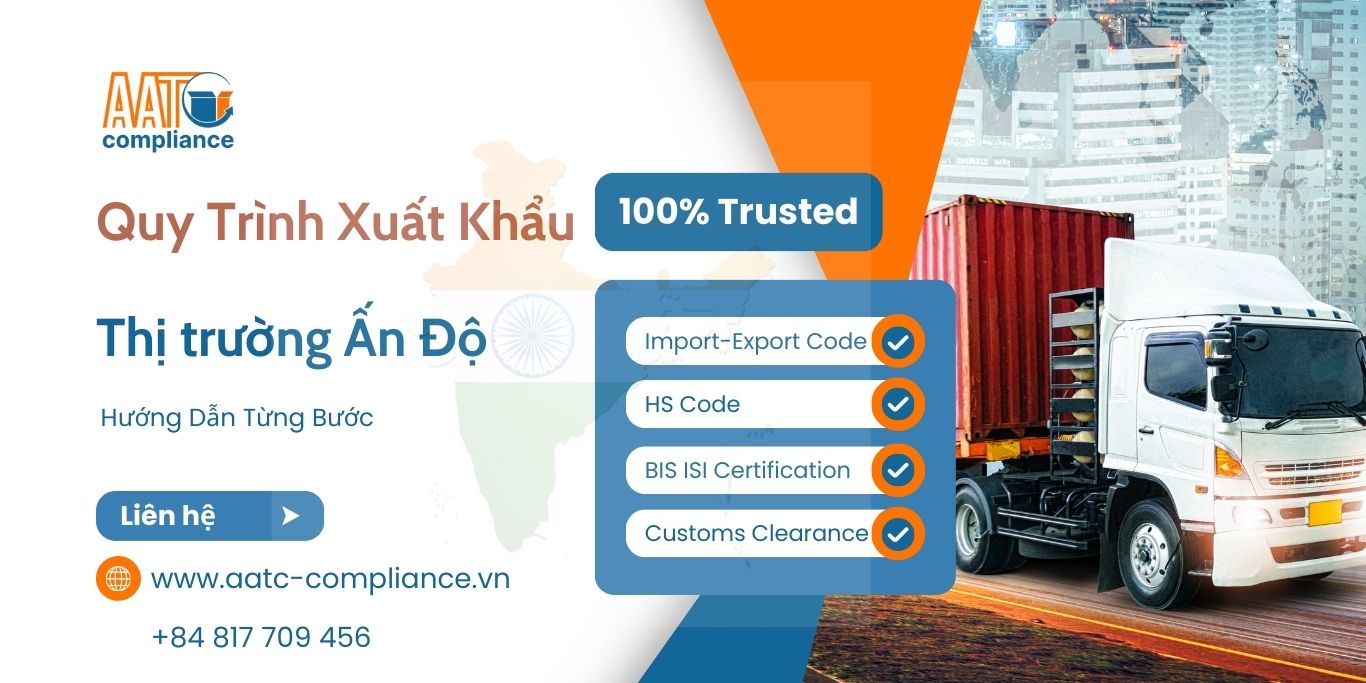
Chứng nhận BIS là gì và tại sao nó quan trọng?
Chứng nhận BIS là tiêu chuẩn bắt buộc do Cục Tiêu Chuẩn Ấn Độ (Bureau of Indian Standards - BIS) ban hành đối với một số sản phẩm nhập khẩu vào Ấn Độ. Chứng nhận này đảm bảo rằng các sản phẩm đáp ứng các yêu cầu về chất lượng, an toàn và bảo vệ môi trường theo quy định của Ấn Độ.
Lưu ý đối với doanh nghiệp Việt Nam:
- Chứng nhận BIS là bắt buộc đối với các sản phẩm như điện tử, thép, đồ chơi, nhôm, gỗ dán, máy móc, và hàng hóa được quản lý đặc biệt.
- Nếu không có chứng nhận BIS, hàng hóa của bạn có thể bị trì hoãn tại hải quan hoặc chịu phạt.
- Doanh nghiệp xuất khẩu từ Việt Nam cần đảm bảo sản phẩm tuân thủ các tiêu chuẩn của BIS để thuận lợi trong quá trình thông quan.
Tìm hiểu thêm về dịch vụ Chứng nhận BIS tại AATC Compliance.
Quy trình xuất khẩu từng bước vào Ấn Độ
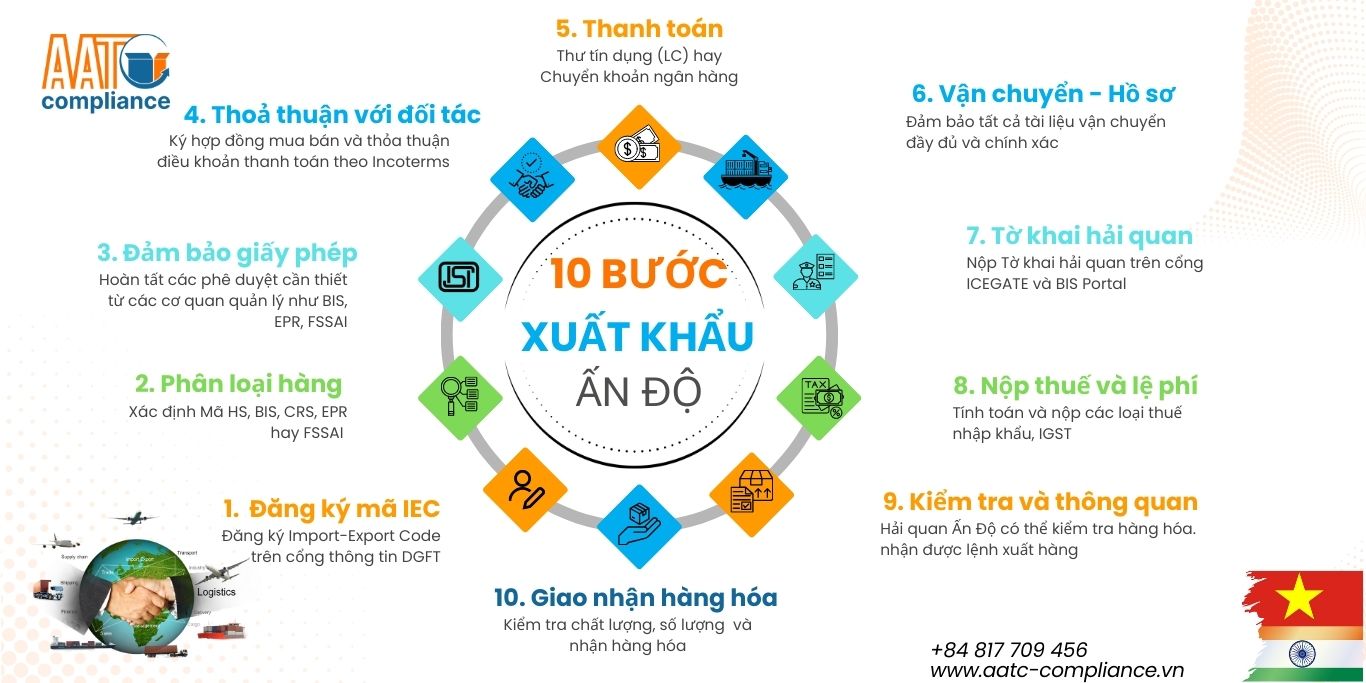
Bước 1: Đăng ký mã IEC (Mã xuất nhập khẩu) - Thực hiện bởi Khách hàng Ấn Độ
- Mã IEC là gì?
IEC (Import-Export Code) là mã số nhận diện duy nhất do Tổng cục Ngoại thương Ấn Độ (DGFT) cấp. Đây là yêu cầu bắt buộc để nhập khẩu hàng hóa vào Ấn Độ.
- Cách đăng ký:
Đăng ký trên cổng thông tin DGFT và hoàn thiện hồ sơ. Doanh nghiệp nhập khẩu hay khách hàng Ấn Độ phải thực hiện đăng ký mã IEC.
Bước 2: Phân loại hàng hóa
- Xác định Mã HS hay HS Code của sản phẩm, vì mã này quyết định mức thuế nhập khẩu và các quy định liên quan.
- Kiểm tra xem sản phẩm có yêu cầu giấy phép hoặc phê duyệt đặc biệt (ví dụ: thực phẩm cần phê duyệt của FSSAI, điện tử cần chứng nhận BIS CRS, hàng tiêu dùng cần Chứng nhận BIS ISI hay máy móc công nghiệp cần Chứng nhận BIS Scheme X).
Bước 3: Đảm bảo có giấy phép/phê duyệt
- Hoàn tất các phê duyệt cần thiết từ các cơ quan quản lý như:
- FSSAI cho thực phẩm.
- Chứng nhận BIS CRS cho sản phẩm điện tử.
- Chứng nhận BIS ISI cho các sản phẩm khác.
- Chứng nhận BIS Scheme X cho máy móc công nghiệp
Được hỗ trợ bởi dịch vụ Xin giấy phép nhập khẩu của chúng tôi.
Bước 4: Thỏa thuận và ký kết điều khoản với khách hàng
- Kiểm tra thông tin khách hàng đáng tin cậy và đàm phán các Điều kiện thương mại quốc tế (Incoterms) (ví dụ: CIF, FOB).
- Ký hợp đồng mua bán và thỏa thuận điều khoản thanh toán.
Bước 5: Sắp xếp thanh toán
- Đảm bảo thanh toán tuân thủ các quy định của RBI/FEMA.
- Phương thức thanh toán phổ biến bao gồm:
- Thư tín dụng (LC): An toàn và thường được sử dụng.
- Chuyển khoản ngân hàng (TT): Thanh toán trực tiếp qua hệ thống ngân hàng.
Bước 6: Vận chuyển và tài liệu
Đảm bảo tất cả tài liệu vận chuyển đầy đủ và chính xác:
- Hóa đơn thương mại: Ghi rõ giá trị và mô tả hàng hóa.
- Danh sách đóng gói: Chi tiết về cách đóng gói sản phẩm.
- Vận đơn (BOL) hoặc Vận đơn hàng không (AWB): Chứng từ vận chuyển.
- Giấy chứng nhận xuất xứ: Xác nhận nơi sản xuất hàng hóa.
- Chứng nhận bảo hiểm: Bảo vệ hàng hóa khỏi rủi ro trong quá trình vận chuyển.
Bước 7: Tờ khai hải quan (Bill of Entry)
- Nộp Tờ khai hải quan (Bill of Entry) trên cổng ICEGATE để khai báo hàng hóa với Hải quan Ấn Độ.
- Đính kèm đầy đủ tài liệu để được xem xét và phê duyệt.
Bước 8: Nộp thuế và lệ phí
- Tính toán và nộp các loại thuế, bao gồm:
- Thuế xuất khẩu
- Thuế nhập khẩu cơ bản (Basic Customs Duty - BCD).
- Thuế GST tích hợp (IGST).
- Các loại phụ phí khác (nếu có).
Bước 9: Kiểm tra và thông quan
- Hải quan Ấn Độ có thể kiểm tra hàng hóa để đảm bảo tuân thủ quy định.
- Sau khi thông quan, sẽ nhận được lệnh xuất hàng (Out of Charge - OOC).
Bước 10: Giao nhận hàng hóa
- Sắp xếp vận chuyển đến điểm đích cuối cùng.
- Kiểm tra chất lượng và số lượng hàng hóa sau khi nhận.
Các câu hỏi phổ biến về thương mại Ấn Độ
Ấn Độ nhập khẩu chủ yếu những gì?
Ấn Độ nhập khẩu nhiều mặt hàng để đáp ứng nhu cầu nội địa. Các mặt hàng chính bao gồm:
- Dầu thô và sản phẩm dầu mỏ.
- Điện tử (điện thoại, linh kiện bán dẫn).
- Máy móc và thiết bị công nghiệp.
- Kim loại quý (vàng, bạc).
- Hóa chất và phân bón.
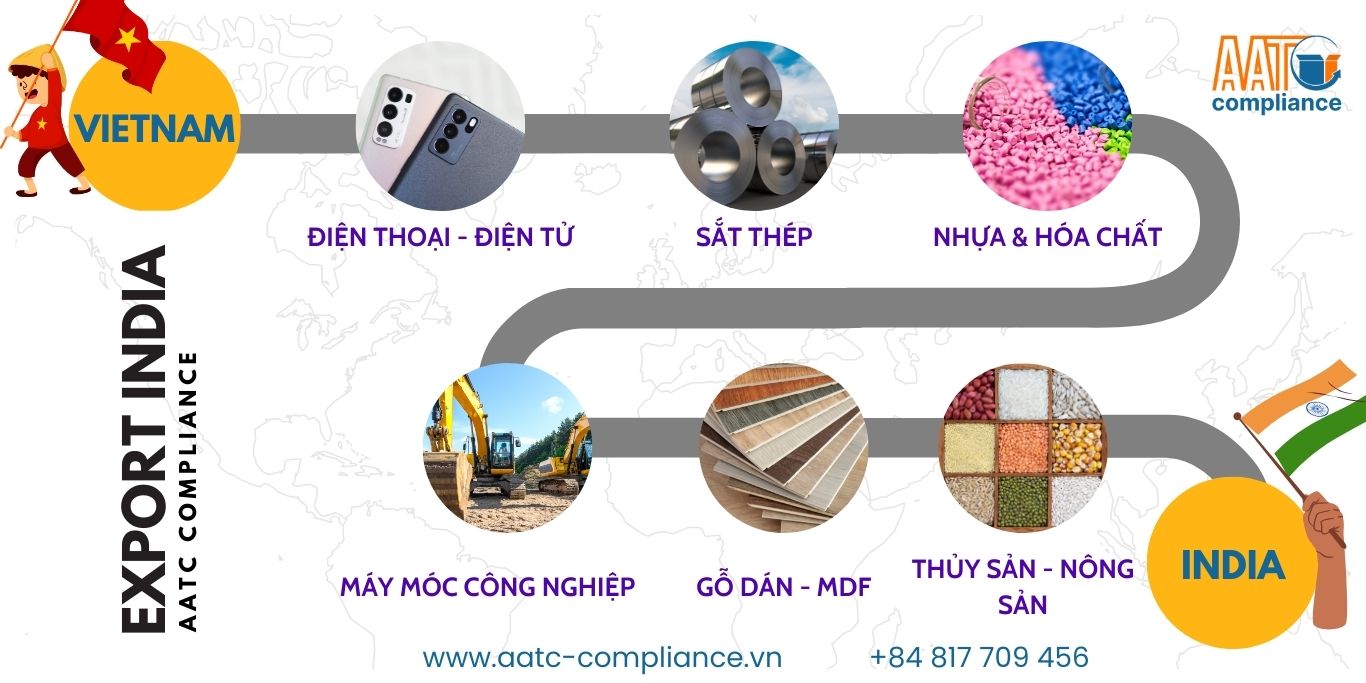
Việt Nam xuất khẩu gì sang Ấn Độ?
Các mặt hàng xuất khẩu từ Việt Nam sang Ấn Độ bao gồm:
- Điện thoại di động và linh kiện.
- Máy móc và thiết bị điện.
- Sản phẩm sắt thép.
- Hóa chất và nhựa.
- Thủy sản và nông sản.
Top 10 mặt hàng xuất khẩu của Ấn Độ?
- Sản phẩm dầu mỏ.
- Đá quý và trang sức.
- Dược phẩm.
- Hàng cơ khí.
- Dệt may.
- Hóa chất hữu cơ.
- Ô tô và phụ tùng.
- Nông sản (gạo, gia vị).
- Dịch vụ CNTT (xuất khẩu số hóa).
- Sản phẩm da.
Tại sao chọn AATC Compliance?
AATC Compliance cung cấp giải pháp toàn diện, giúp doanh nghiệp thực hiện quy trình nhập khẩu vào Ấn Độ một cách dễ dàng:
- Dịch vụ Chứng nhận BIS: Đảm bảo hàng hóa tuân thủ tiêu chuẩn Ấn Độ.
- Chuẩn bị tài liệu hải quan: Đầy đủ và chính xác, giúp thông quan nhanh chóng.
- Hỗ trợ pháp lý và quy định: Cập nhật chính sách thương mại mới nhất.
Liên hệ ngay qua:
Kết luận
Quy trình nhập khẩu vào Ấn Độ có thể phức tạp, nhưng với sự chuẩn bị kỹ lưỡng và hỗ trợ từ các chuyên gia như AATC Compliance, bạn có thể dễ dàng vượt qua mọi trở ngại, mở rộng thị trường và thành công trong một trong những thị trường hấp dẫn nhất thế giới.
Bắt đầu ngay hôm nay với giải pháp nhập khẩu toàn diện của chúng tôi!
Liên hệ để được tư vấn miễn phí